
Multi-cohort validation (LODO)
a4_lodo.Rmd
library(pipeML)
library(dplyr)
#>
#> Attaching package: 'dplyr'
#> The following objects are masked from 'package:stats':
#>
#>     filter, lag
#> The following objects are masked from 'package:base':
#>
#>     intersect, setdiff, setequal, union
Leave-One-Dataset-Out analysis
When samples come from several cohorts, a model should be evaluated on a cohort it has never seen. In a Leave-One-Dataset-Out (LODO) analysis, each cohort is left out in turn: the models are trained on the other cohorts and tested on the left-out one.
Inside the training cohorts, set LODO = TRUE and give
the cohort of each sample in batch_var (in the order of the
rows of the features): the cross-validation folds are then stratified by
cohort and outcome, so every fold contains samples of every training
cohort in the same proportions. The cohort is only used to build the
folds; it is not used as a predictor. For classification, each training
cohort needs at least k_folds samples.
Classification
Simulate 90 samples from three cohorts, with 15 features:
set.seed(123)

traitData <- data.frame(
  Sample = paste0("Sample", 1:90),
  Response = sample(c("R", "NR"), 90, replace = TRUE),
  Cohort = rep(paste0("Cohort", 1:3), each = 30)
)
rownames(traitData) <- traitData$Sample

features_all <- as.data.frame(matrix(runif(90 * 15), nrow = 90, ncol = 15))
rownames(features_all) <- traitData$Sample
colnames(features_all) <- paste0("Feature", 1:15)
Leave each cohort out in turn:
prediction <- list()

for (cohort in unique(traitData$Cohort)) {

  # Test cohort
  traitData_test <- traitData %>% dplyr::filter(Cohort == cohort)
  features_test <- features_all[rownames(traitData_test), ]

  # Training cohorts
  traitData_train <- traitData %>% dplyr::filter(Cohort != cohort)
  features_train <- features_all[rownames(traitData_train), ]

  # Training, with folds stratified by cohort
  res_lodo <- compute_features.training.ML(features_train = features_train,
                                           target_var = traitData_train$Response,
                                           task_type = "classification",
                                           trait.positive = "R",
                                           metric = "AUROC",
                                           k_folds = 3,
                                           n_rep = 2,
                                           LODO = TRUE,
                                           batch_var = traitData_train$Cohort,
                                           ncores = 2,
                                           return = FALSE)

  # Test on the left-out cohort
  prediction[[cohort]] <- compute_prediction(model = res_lodo$Model,
                                             test_data = features_test,
                                             target_var = traitData_test$Response,
                                             task_type = "classification",
                                             trait.positive = "R",
                                             return = FALSE)
}
AUROC of each left-out cohort:
sapply(prediction, function(x) x$AUC$AUROC$estimate)get_curves() draws the ROC and precision-recall curves
of all cohorts together. Stack the metrics of each cohort, with the
cohort in a column, and give the AUROC and AUPRC of each cohort as named
vectors:
roc_data <- lapply(names(prediction), function(cohort) {
  df <- prediction[[cohort]]$Metrics
  df$cohort <- cohort
  df
}) %>% dplyr::bind_rows()

auc_roc <- list(
  estimate = sapply(prediction, function(x) x$AUC$AUROC$estimate),
  lower = sapply(prediction, function(x) x$AUC$AUROC$lower),
  upper = sapply(prediction, function(x) x$AUC$AUROC$upper)
)

auc_prc <- list(
  estimate = sapply(prediction, function(x) x$AUC$AUPRC$estimate),
  lower = sapply(prediction, function(x) x$AUC$AUPRC$lower),
  upper = sapply(prediction, function(x) x$AUC$AUPRC$upper)
)
get_curves(data = roc_data,
           color = "cohort",
           auc_roc = auc_roc,
           auc_prc = auc_prc,
           LODO = TRUE,
           file.name = "LODO_cohort_example",
           width = 9,
           height = 9)
The plots are saved in Results/:
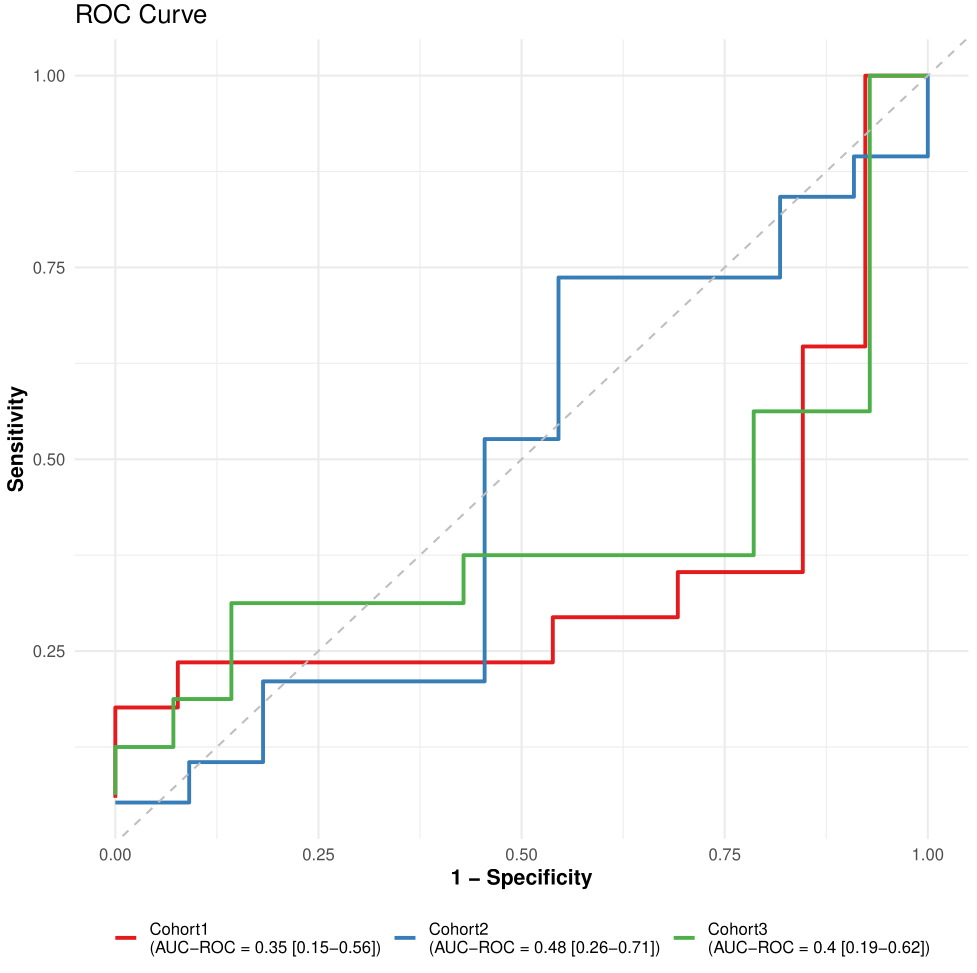
Figure 1. ROC curves of each left-out cohort.
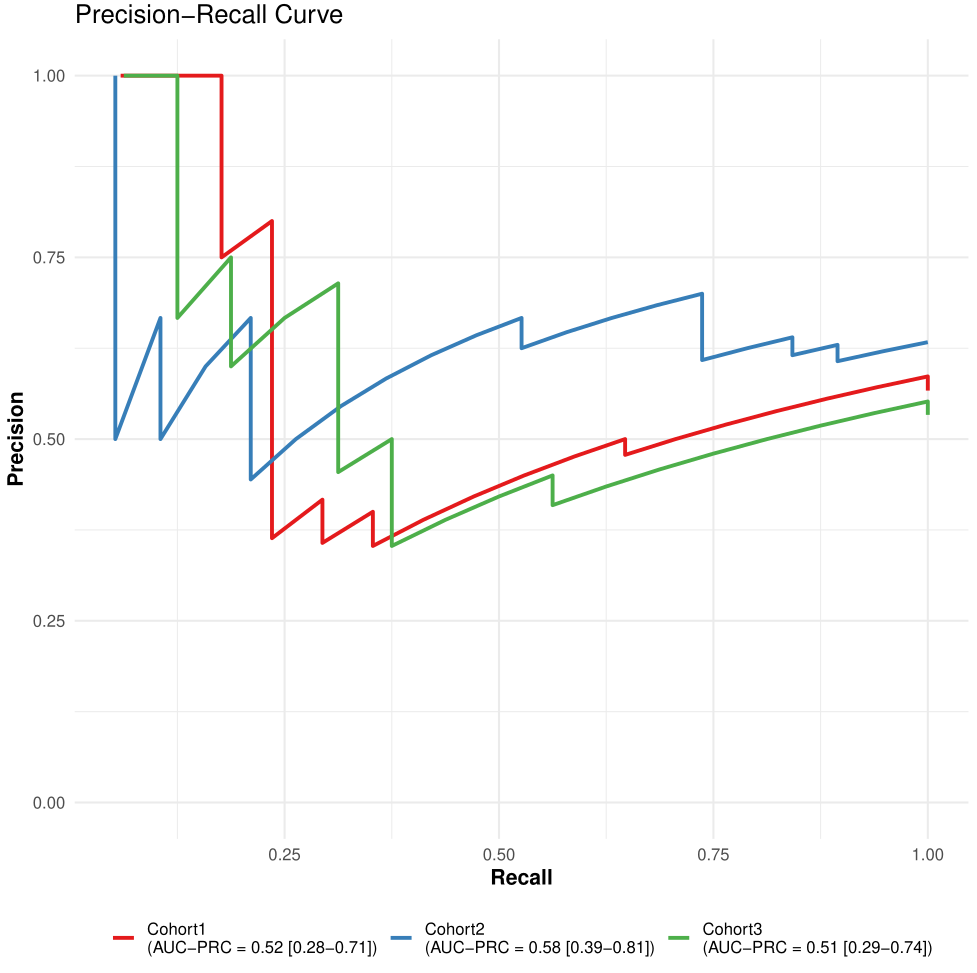
Figure 2. Precision-recall curves of each left-out cohort.
Survival
The same loop works for survival tasks. The cross-validation folds are then stratified by cohort and event. Simulate survival times for the same samples:
set.seed(123)
traitData$time <- stats::rexp(90, rate = exp(features_all$Feature1 - 0.5) / 365)
traitData$event <- stats::rbinom(90, 1, 0.7)
c_index <- c()

for (cohort in unique(traitData$Cohort)) {

  traitData_test <- traitData %>% dplyr::filter(Cohort == cohort)
  traitData_train <- traitData %>% dplyr::filter(Cohort != cohort)

  res_lodo_survival <- compute_features.training.ML(features_train = features_all[rownames(traitData_train), ],
                                                    task_type = "survival",
                                                    time_var = traitData_train$time,
                                                    event_var = traitData_train$event,
                                                    k_folds = 3,
                                                    n_rep = 1,
                                                    LODO = TRUE,
                                                    batch_var = traitData_train$Cohort,
                                                    ncores = 2)

  pred <- compute_prediction(model = res_lodo_survival$Model,
                             test_data = features_all[rownames(traitData_test), ],
                             task_type = "survival",
                             time_var = traitData_test$time,
                             event_var = traitData_test$event)

  c_index[cohort] <- pred$c_index
}

c_index
One-step training and prediction
compute_features.ML() also accepts
LODO = TRUE. There, batch_id is the name of
the cohort column of coldata:
test_cohort <- "Cohort3"
train_samples <- rownames(traitData)[traitData$Cohort != test_cohort]
test_samples <- rownames(traitData)[traitData$Cohort == test_cohort]

res_onestep_lodo <- compute_features.ML(features_train = features_all[train_samples, ],
                                        features_test = features_all[test_samples, ],
                                        coldata = traitData,
                                        task_type = "classification",
                                        trait = "Response",
                                        trait.positive = "R",
                                        k_folds = 3,
                                        n_rep = 2,
                                        LODO = TRUE,
                                        batch_id = "Cohort",
                                        ncores = 2)
res_onestep_lodo$AUC$AUROC